
Our Stories
Safe Gold Production: Protecting Employees’ Safety, Health and Wellness
September 23, 2024
B2Gold’s occupational health and hygiene standards remain a key pillar for ensuring that workplace health hazards and occupational illnesses that arise from physical, chemical and other workplace processes are appropriately managed. These standards require that occupational health evaluation, planning, and design are integrated into our business development strategies, are periodically reviewed, and are independently audited to ensure continuous improvement. We also monitor all sites to verify that they meet industrial hygiene best practice standards and promote wellness (physical and mental health). These include initiatives regarding fitness for work, personal nutrition, HIV/AIDS, malaria prevention, and stress/fatigue management.
Each year we strive to improve our occupational health and hygiene programs through internal capacity building, the use of workplace assessments, evaluation and monitoring, and exposure control management. Additionally, safety personnel who are responsible for administering and monitoring hygiene are given specialized technical occupational hygiene training.
As an example, meeting stringent regulatory requirements, ensuring employee wellbeing, and optimizing operational efficiency are paramount for our Fekola Gold Mine in Mali. In response to these challenges, the Fekola Health and Safety team embarked on a mission to enhance efficiency in annual medical check-ups while prioritizing employee wellness and safety.
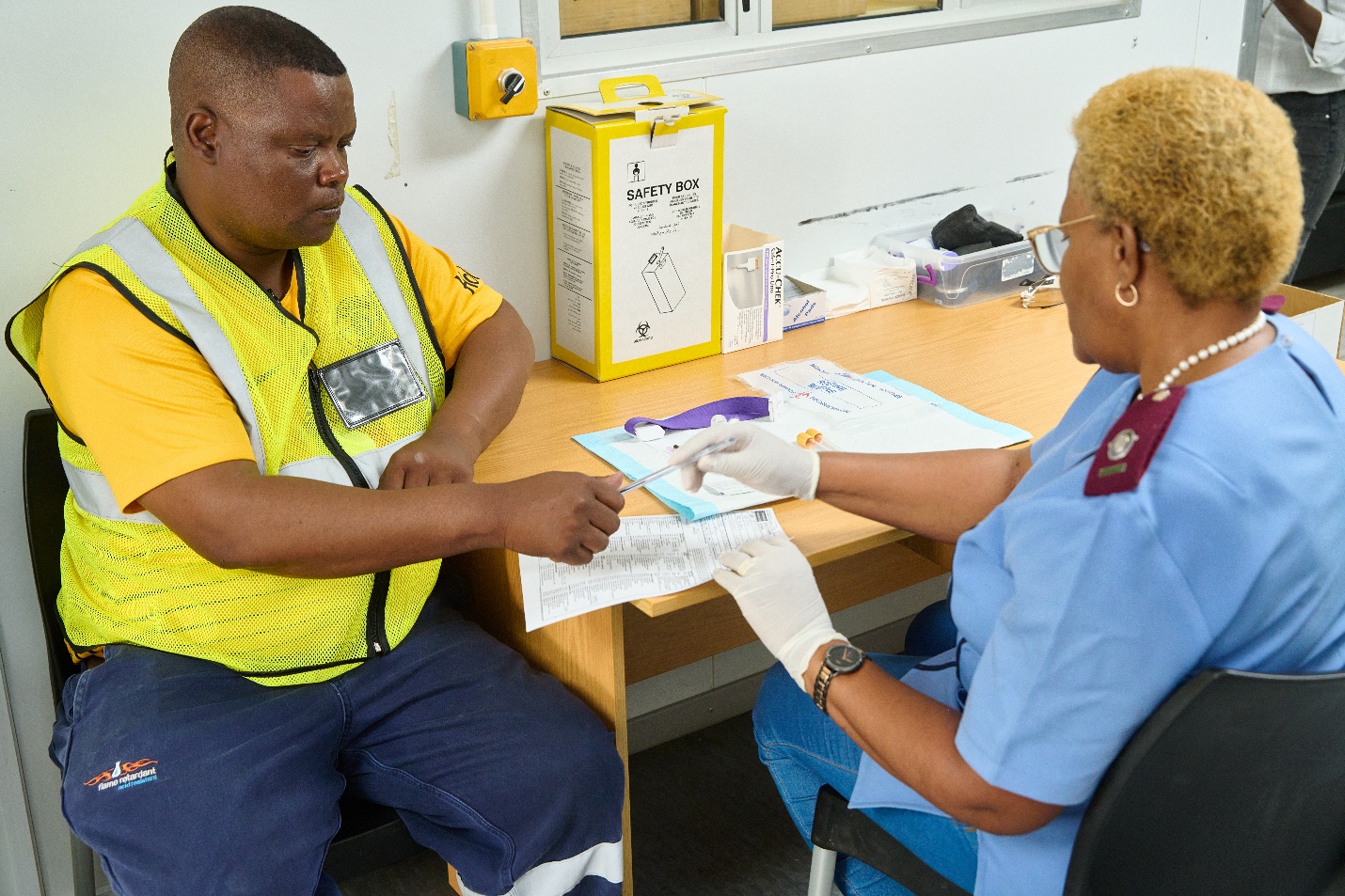
The solution came in the form of the Fekola Occupational Health Clinic, a dedicated on-site facility designed to promote the health, safety, and welfare of workers. Equipped with state-of-the-art amenities, including an x-ray facility, medical laboratory, spirometry, and audiometry, the clinic serves as a cornerstone of occupational health management at the mine.
Fekola’s clinic statistics for 2023 include:
- conducting 1,903 annual medical check-ups to ensure the ongoing health of employees;
- completing 615 pre-employment checks to assess prospective employees’ fitness for duty;
- managing 3,356 risk-based surveillance cases to proactively address potential health hazards;
- conducting 802 eye assessments to safeguard employees’ vision and wellbeing; and
- administering 80 exit medicals to facilitate smooth transitions for departing employees.
More broadly, in 2023 our B2Gold operations recorded zero occupational health and hygiene claims (illness/diseases) for a sixth consecutive year.
Our on-site clinics and medical service providers conducted 14,413 health consultations and medical evaluations in 2023. Our on-site clinics and medical services (Fekola, Masbate and Otjikoto) administered 3,392 vaccinations to our employees. None of our operations reported occupational cases of hepatitis in 2023; however, we experienced an increase in malaria cases, primarily at our Fekola operation in Mali. In 2023 we had 2,161 malaria cases, compared with 1,512 in 2022.
To ensure our employees return HOME-SAFE, as a responsible miner, B2Gold will continue to focus on identifying, understanding, and controlling the risks associated with hazards in the workplace.
